IPTV Subscription vs Traditional TV: A Modern Viewing Comparison
The way people watch television has changed a lot. For years, traditional TV was the main option in many homes. Viewers followed fixed schedules, used one main screen, and depended on broadcast, cable, or satellite systems. Today, internet-based viewing has created a different experience. This is why many UK viewers compare IPTV Subscription vs Traditional TV before deciding which option fits their daily habits.
This comparison is not only about technology. It is also about flexibility, devices, control, setup, internet quality, and the way households organise entertainment. Some viewers still prefer the simplicity of traditional TV, while others want the freedom of a modern streaming-style setup.
At Techno Blogg, we explore digital entertainment, streaming technology, and connected home viewing in a practical way.
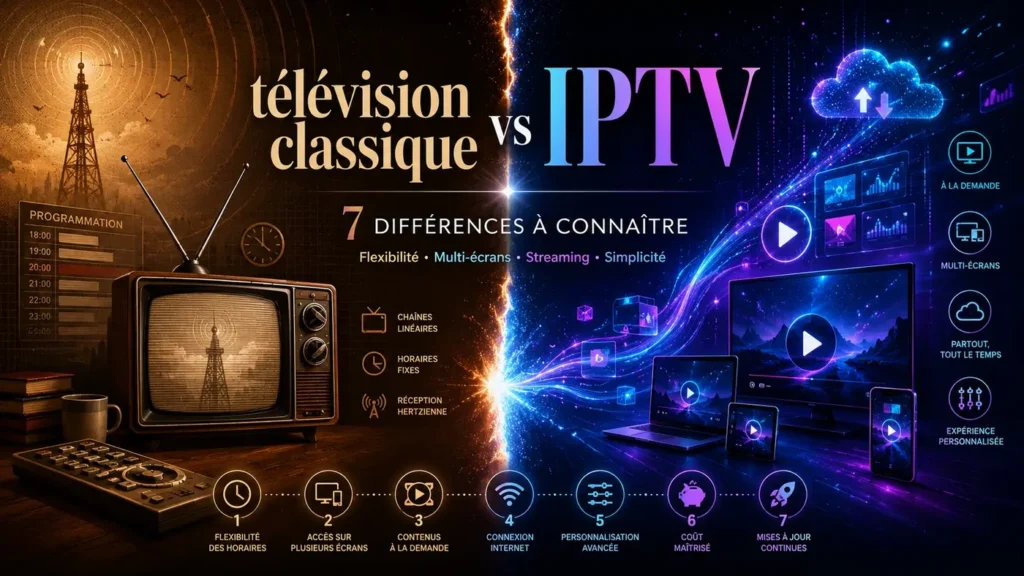
In this guide, we compare IPTV Subscription vs Traditional TV through seven clear differences, while keeping the focus on safe, responsible, and realistic viewing expectations.
What Makes IPTV Subscription Different from Traditional TV?
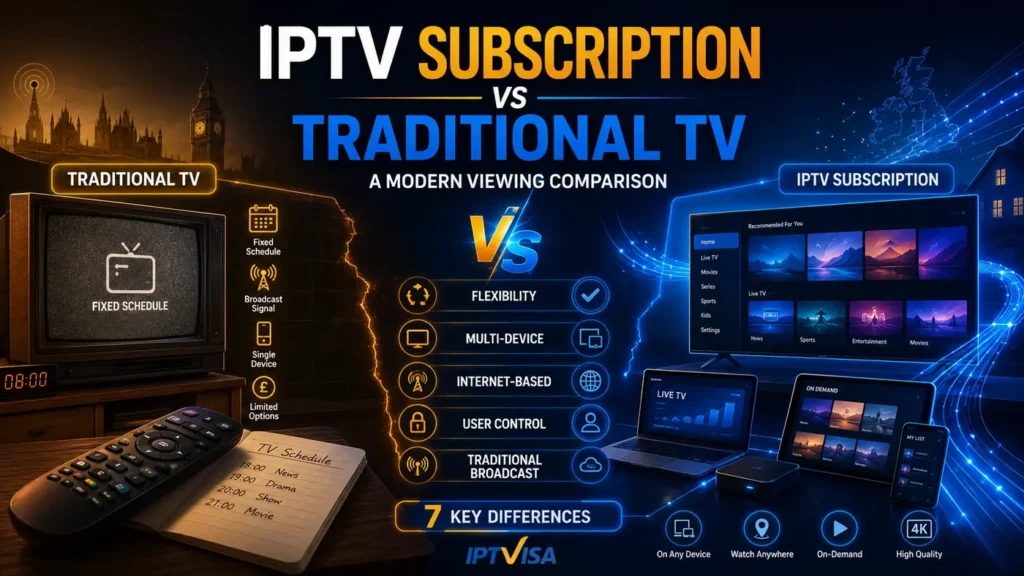
The main difference between IPTV Subscription vs Traditional TV is the delivery method. Traditional TV usually depends on broadcast, cable, or satellite infrastructure. IPTV uses an internet connection to deliver television-style content through compatible devices and apps.
This difference changes the whole viewing experience. Traditional TV is often built around fixed channels and scheduled programming. IPTV is usually more flexible because it works through internet-based access and connected devices.
For many UK households, this matters because viewing habits are no longer the same as they were ten or twenty years ago. People watch from smart TVs, tablets, phones, laptops, and streaming devices. They also expect more control over when and where they watch.
However, IPTV Subscription vs Traditional TV is not about saying one option is perfect for everyone. Each model has advantages. Traditional TV can feel familiar and simple. IPTV can feel more flexible and modern. The best choice depends on the household’s devices, internet connection, viewing habits, and expectations.
1. Delivery Method: Internet Connection vs Broadcast Signal
The first difference in IPTV Subscription vs Traditional TV is how content reaches the viewer. Traditional TV normally uses broadcast signals, satellite systems, or cable networks. These methods are built around older television infrastructure and usually work through a set-top box, aerial, cable line, or satellite dish.
IPTV uses the internet. Content is delivered through an internet connection and viewed on a compatible device. This can include a smart TV, streaming device, Android TV box, laptop, tablet, or smartphone.
This change affects convenience. Traditional TV may require a fixed installation or dedicated equipment. IPTV depends more on broadband quality and app compatibility. If the internet connection is strong and the device is supported, the experience can feel flexible and modern.
For users who want to understand the wider idea behind internet-based TV, the Wikipedia page about streaming television gives a general overview of how television content can be delivered through online systems.
When comparing IPTV Subscription vs Traditional TV, delivery method is the foundation. One model is based on traditional broadcast infrastructure. The other is based on internet access and connected devices.
2. Viewing Flexibility: Fixed Schedule vs On-Demand Habits
Another major difference is flexibility. Traditional TV is often connected to fixed schedules. Viewers watch what is available at a specific time, unless they use recording or catch-up features. This model can still work well for people who enjoy routine or prefer simple channel browsing.
IPTV is usually more aligned with modern viewing habits. Many users want to watch when they have time, not only when a programme is broadcast. This is where internet-based viewing can feel more convenient.
The comparison between IPTV Subscription vs Traditional TV becomes clear when looking at daily life. A busy user may not always be available at the same time every evening. A family may have different people watching different content on different screens. A student or professional may prefer watching on a laptop or tablet instead of the main TV.
Flexible viewing does not mean users should ignore quality or safety. It simply means that internet-based access can adapt better to modern routines when the service is stable and the setup is clear.
For many households, flexibility is one of the strongest reasons to consider IPTV. It gives users more control over how entertainment fits into their schedule.
3. Device Access: One Main TV vs Multiple Connected Screens
Traditional TV is usually centred on the main television in the living room. This can be simple and comfortable, especially for families who watch together. However, it may feel limited for users who want access across different devices.
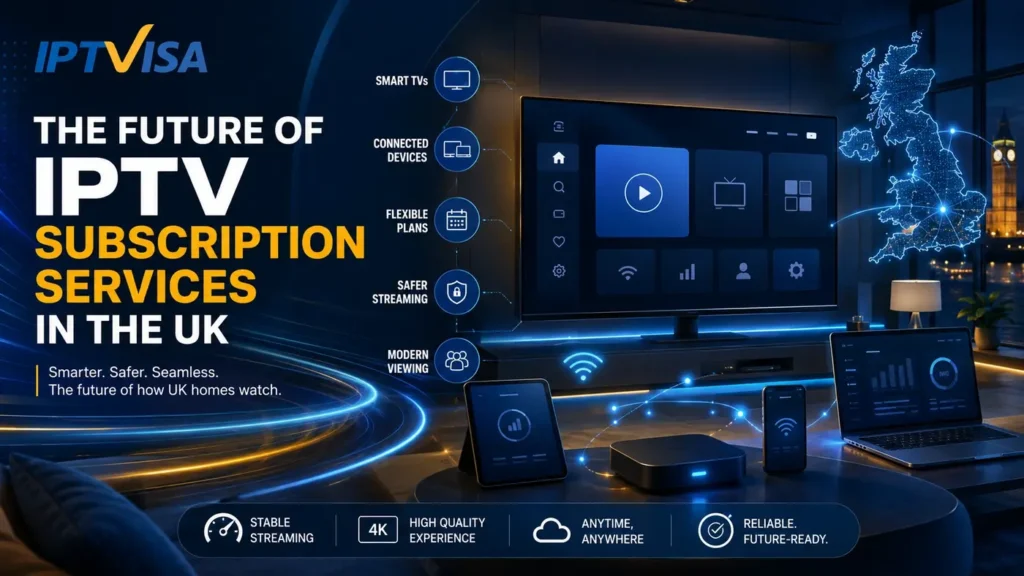
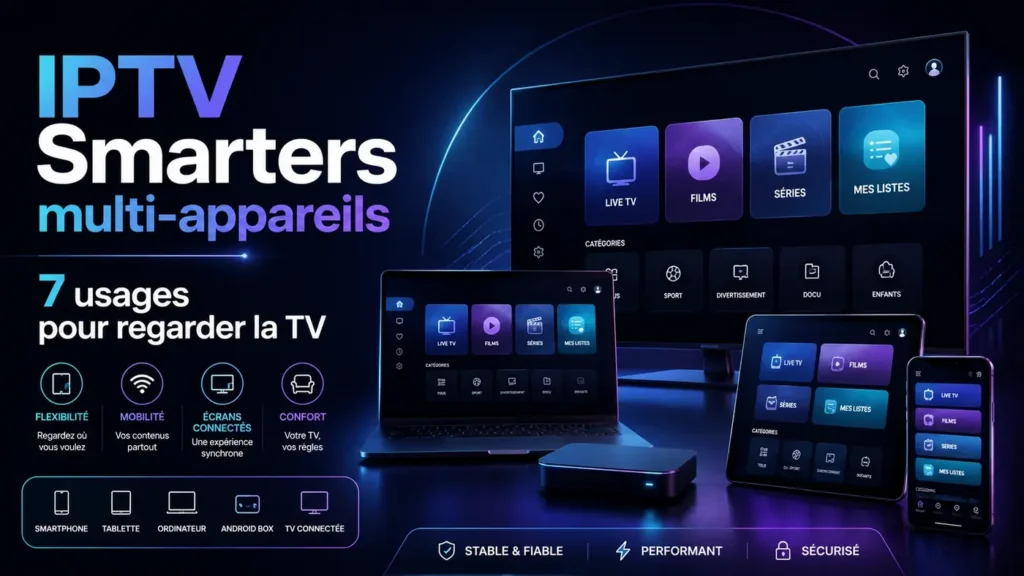
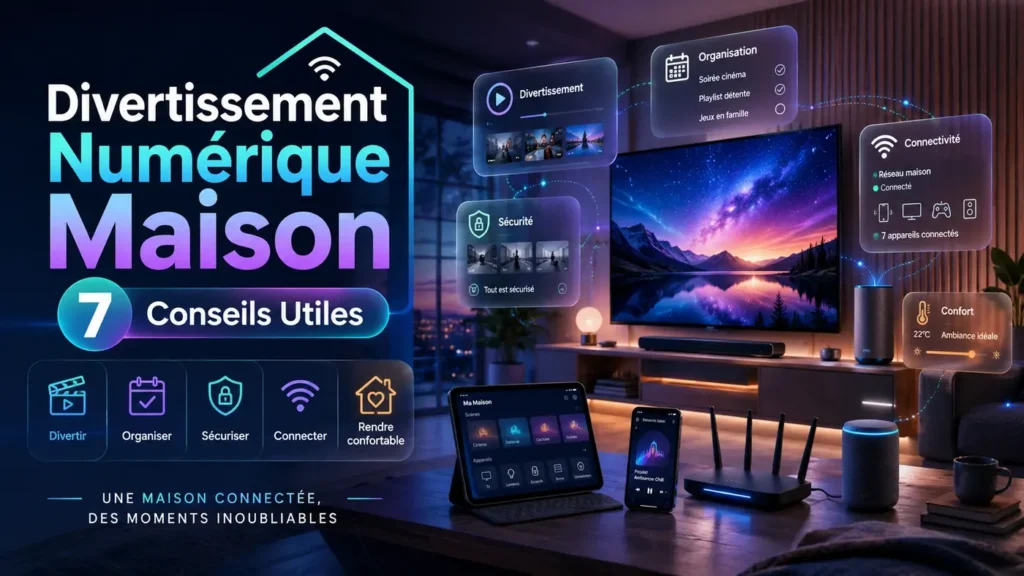
IPTV Subscription vs Traditional TV becomes more interesting when device access is considered. IPTV can work across smart TVs, streaming boxes, smartphones, tablets, and laptops, depending on the service and device compatibility. This creates a more flexible entertainment environment.
Modern households often have several connected screens. Someone may watch on a smart TV, another person may use a tablet, and someone else may use a phone. Internet-based viewing supports this kind of behaviour more naturally than traditional TV.
This does not mean every IPTV service works perfectly on every device. Users still need to check compatibility before choosing a plan. A good experience depends on supported apps, updated devices, stable internet, and clear setup instructions.
For viewers comparing options, IPTV Subscription can be considered as part of a wider look at flexible internet-based viewing and modern device access.
The key difference is simple: traditional TV often focuses on one main screen, while IPTV can support a more connected viewing lifestyle.
4. User Control: Personal Choice vs Standard Programming
User control is another important point in the IPTV Subscription vs Traditional TV comparison. Traditional TV usually follows a programming structure created by broadcasters. Viewers choose from what is currently available on channels.
This model can be easy and familiar. Some people like turning on the TV and browsing channels without thinking too much. It creates a simple experience that does not require much setup or decision-making.
IPTV usually gives users more control. Depending on the service, viewers may be able to browse categories, access on-demand content, switch between devices, or organise their viewing in a more personal way.
This personal control is one reason internet-based TV has become popular. Users are already familiar with choosing content on music apps, video platforms, and streaming services. IPTV follows a similar digital habit.
However, more control also means users should choose carefully. A clean interface, clear categories, and stable performance are important. If the app is confusing or slow, extra control can become frustrating.
When comparing IPTV Subscription vs Traditional TV, users should think about whether they prefer a simple scheduled experience or a more flexible, user-controlled environment.
5. Internet Requirements and Home Connection Quality
Traditional TV often works independently from the home internet connection. If the broadcast, cable, or satellite setup is working, the user can watch without relying heavily on broadband speed.
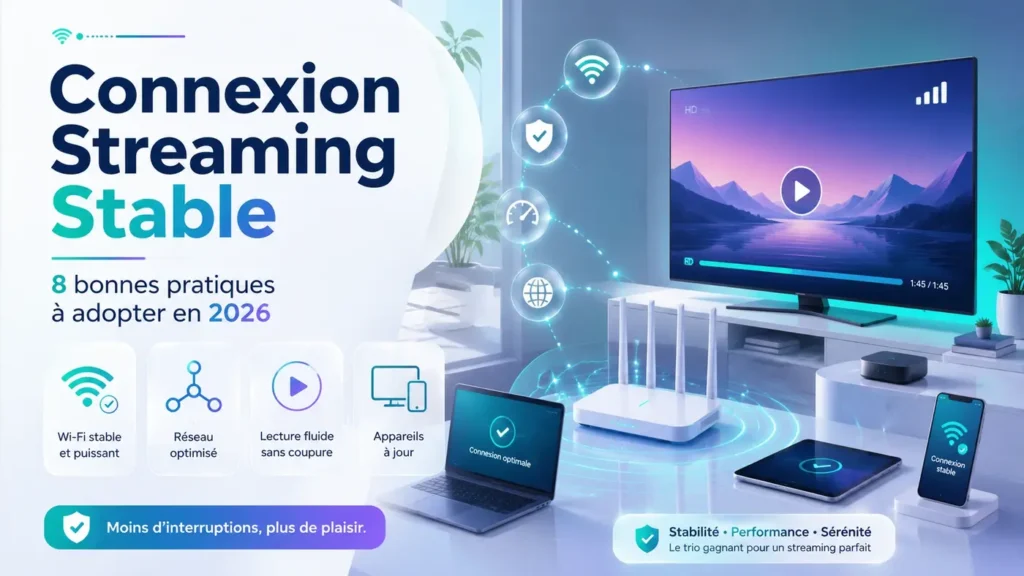
IPTV is different. Since it uses the internet, connection quality matters. A weak or unstable connection can affect playback, picture quality, and loading speed. This is one of the most important practical differences in IPTV Subscription vs Traditional TV.
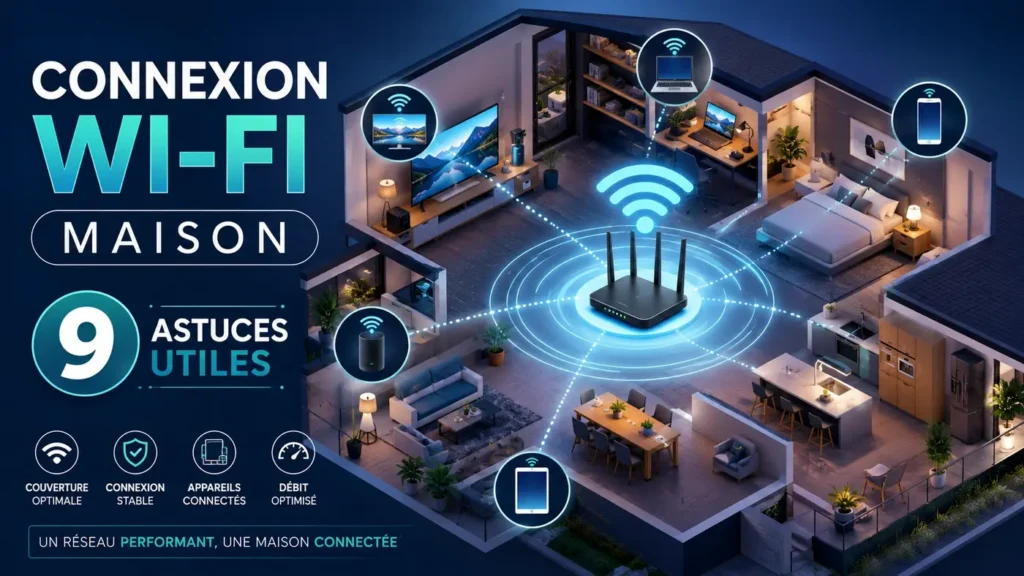
For IPTV, users should think about broadband speed, Wi-Fi strength, router quality, and how many devices are connected at the same time. A home with several people streaming, gaming, or downloading may need a stronger connection for smooth viewing.
A wired connection may offer more stability than Wi-Fi for some smart TVs or streaming devices. In larger homes, mesh Wi-Fi or a better router may also improve performance.
This does not mean IPTV is difficult to use. It simply means the internet connection becomes part of the viewing setup. Traditional TV may be less dependent on broadband, while IPTV rewards users who have a stable and well-managed home network.
A realistic comparison should include this point. The best option depends not only on content preferences, but also on the quality of the household’s internet setup.
6. Setup Experience and Everyday Convenience
Setup is another area where IPTV Subscription vs Traditional TV can feel different. Traditional TV may require installation of a dish, aerial, cable line, or provider equipment. Once installed, it can be straightforward to use.
IPTV setup is often more app-based. Users may need to install an app, log in, configure a device, or follow instructions from the provider. For people used to smart TVs and streaming apps, this can feel simple. For beginners, clear instructions are important.
Everyday convenience depends on the user. Some people prefer traditional TV because it feels familiar and stable. Others prefer IPTV because it can be accessed through devices they already use.
The ideal setup is one that matches the household. A family that uses one TV may prefer simplicity. A household with several devices may prefer flexibility. A user who travels often may appreciate access beyond the main living room screen.
Setup should never feel risky or confusing. Users should avoid unclear instructions, suspicious downloads, or services that do not explain compatibility. A responsible IPTV setup should be clear, safe, and easy to follow.
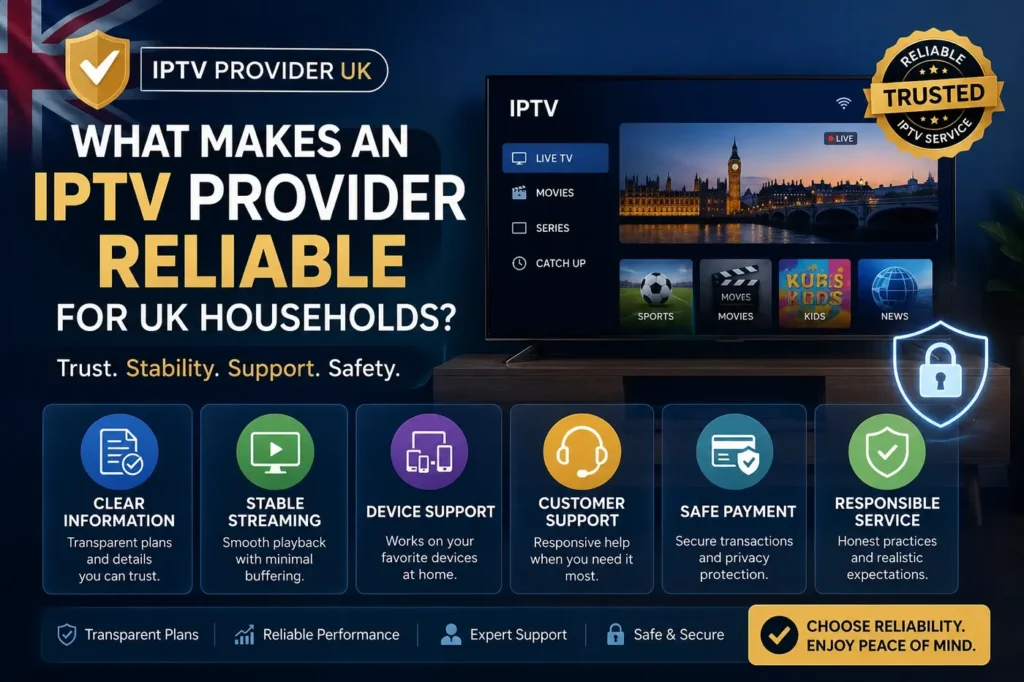
For users who want to judge reliability before choosing a provider, our IPTV Provider UK reliable viewing guide explains trust signals such as clear information, support, safe payment, and device guidance.
Convenience is not only about technology. It is about how easily the service fits into daily life.
7. Plan Flexibility and Modern Subscription Style
The final difference in IPTV Subscription vs Traditional TV is plan flexibility. Traditional TV packages may come with fixed bundles, contracts, equipment requirements, or limited customisation. This model can still work well for users who prefer a stable long-term package.
IPTV subscription plans can feel more flexible, depending on the provider. Users may find different plan durations, device options, and viewing features. This can be useful for people who want a service that fits their changing habits.
However, flexibility should come with clarity. Users should always check what a plan includes, how long it lasts, what devices are supported, and what support is available. A flexible plan is only useful when the information is transparent.
Modern viewers often want control over subscriptions. They are used to choosing monthly plans, upgrading services, cancelling apps, or testing digital platforms. IPTV fits into this subscription-based lifestyle more naturally than traditional TV.
Still, users should not choose only based on price or big claims. A good plan should be stable, clearly explained, compatible with the right devices, and supported by helpful service information.
When comparing IPTV Subscription vs Traditional TV, plan flexibility is one of the strongest differences. Traditional TV can feel structured and familiar. IPTV can feel adaptable and modern.
Which Option Fits Modern UK Households?
There is no single answer for every household. The right choice depends on how people watch, what devices they use, and how comfortable they are with internet-based services.
Traditional TV may fit viewers who prefer a simple, familiar setup. It can be suitable for people who mainly watch scheduled programming and do not need much device flexibility.
IPTV may fit viewers who want more control, multi-device access, flexible plans, and modern streaming-style convenience. It can be useful for households that already use smart TVs, tablets, phones, and connected devices.
The comparison between IPTV Subscription vs Traditional TV should focus on lifestyle. A modern household with several screens may value flexibility. A household that prefers routine may value traditional simplicity.
For a wider view of where internet-based TV is heading, our upcoming guide on the future of IPTV subscription services in the UK will explore market trends, user expectations, and connected home entertainment.
The best choice is the one that supports daily habits without creating confusion, risk, or unnecessary complexity.
Safe and Responsible Viewing Considerations
Safety should be part of any digital entertainment decision. Whether users choose IPTV or traditional TV, they should look for clear information, responsible access, and trustworthy service details.
For IPTV, users should be especially careful with unknown apps, unclear downloads, unrealistic offers, and vague payment pages. A responsible service should explain setup steps, supported devices, plan details, and support options clearly.
Traditional TV can also involve contracts, equipment, and service terms that users should read carefully. The safest approach is always to understand what is included before making a commitment.
When comparing IPTV Subscription vs Traditional TV, users should avoid focusing only on convenience. Security, transparency, and support matter too.
A good viewing experience should feel stable, clear, and responsible. Users should know how the service works, what they are paying for, and how to get help if needed.
FAQ
What is the main difference between IPTV Subscription vs Traditional TV?
The main difference is the delivery method. Traditional TV usually uses broadcast, cable, or satellite systems, while IPTV uses an internet connection and compatible devices to deliver television-style content.
Is IPTV more flexible than traditional TV?
IPTV can be more flexible because it may work across multiple devices and support internet-based viewing habits. Traditional TV is often more fixed around scheduled programming and one main screen.
Does IPTV need a strong internet connection?
Yes. IPTV depends on internet quality. A stable broadband connection, good Wi-Fi, and compatible devices can improve playback and reduce interruptions.
Is traditional TV still useful?
Yes. Traditional TV can still be useful for viewers who prefer a simple, familiar setup and fixed programming. It depends on the household’s habits and expectations.
How should users choose between IPTV and traditional TV?
Users should compare flexibility, device access, internet quality, setup style, plan details, and safety. The best choice is the one that fits daily viewing habits and feels clear and reliable.
Final Thoughts
IPTV Subscription vs Traditional TV is a useful comparison because modern viewing habits are changing. Traditional TV remains familiar and simple, while IPTV offers a more flexible, internet-based experience.
The biggest differences appear in delivery method, device access, user control, internet requirements, setup convenience, and plan flexibility. Traditional TV may suit users who prefer structure. IPTV may suit users who want connected viewing across multiple devices.
The best option depends on the household. Viewers should think about how they watch, which devices they use, whether their internet is stable, and how much flexibility they want.
By comparing IPTV Subscription vs Traditional TV carefully, UK viewers can make a smarter decision and choose a viewing style that supports modern home entertainment without unnecessary confusion or risk.




























































































































 English